Mise en Place: Setting the Table for Possibility
What if some of our biggest educational questions begin with how we set our tables?
Twenty years ago, I sat with Grade 6 and 7 students around clusters of desks we’d pulled together, wondering about some very big things. Through Living Inquiry, we explored questions of Place, Language, Time, and Self/Other. We wrote, photographed, made art, debated, wondered, and followed questions whose answers I couldn’t know in advance (Paterson, 2010). My students described this kind of learning as “about you,” “beyond marks,” and “out of the box.”
I remember being surprised by where their thinking took us—and by how much I had to learn about trusting what I couldn’t plan. Around those makeshift harvest tables, my understanding of teaching began to shift. I became less interested in controlling where learning would end and more interested in attending to the conditions in which meaning could be cultivated. What ideas might grow here if we tended the conditions well?

From Middle School to Kindergarten:
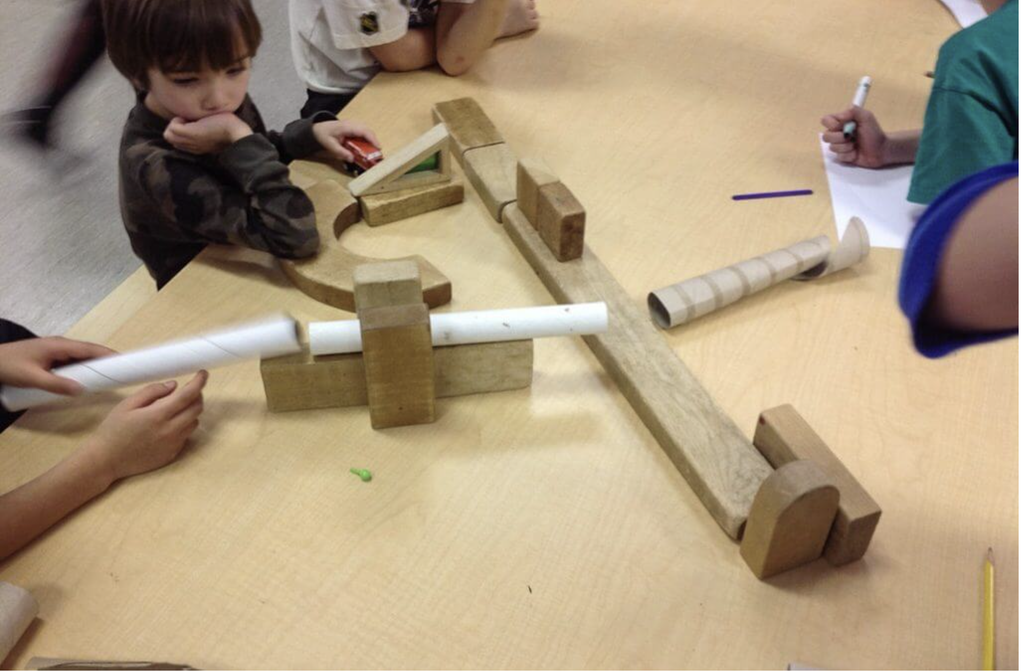
Nearly a decade later, I was moving tables around my Kindergarten classroom. The children and I pushed them together for shared meals and gatherings, pulled them apart to become studios and theatres, covered them with open-ended materials, and transformed objects into meaningful things (Paterson, 2015a, 2015b). I became fascinated by affordances—the possibilities that emerge in the relationship between a person and an environment (Gibson, 1977). I would later encounter another idea that helped me understand what I was doing.
Weisberg and colleagues (2014) borrow the culinary term mise en place—the preparations chefs make before cooking—to explore how the environments pedagogists arrange can shape thought and action. Before anything is made, attention has already been paid to what is within reach, what sits beside what, what has been prepared, and what possibilities those arrangements invite. A table was never simply a table. A material wasn’t limited to the purpose an adult had assigned to it. I was learning to set the table without deciding in advance what would be made there.
From Classroom to Staffroom:
And so I kept arranging tables. Through Pop-Up Studio, I carried materials and possibilities into other people’s classrooms, working alongside teachers and children to see what might emerge. At the same time, I was working part-time in public school classrooms as a specialist and also facilitating workshops in schools near and far. Moving among so many educational spaces, I began noticing a tension I couldn’t quite shake. We were putting tremendous thought into cultivating conditions for children to be curious, creative, connected, agentic, and fully engaged in their learning, while the adults creating those conditions were increasingly navigating stress, competing priorities, and growing demands. And those realities didn’t stay neatly outside the classroom door.
From Staffrooms to the Research Lab:
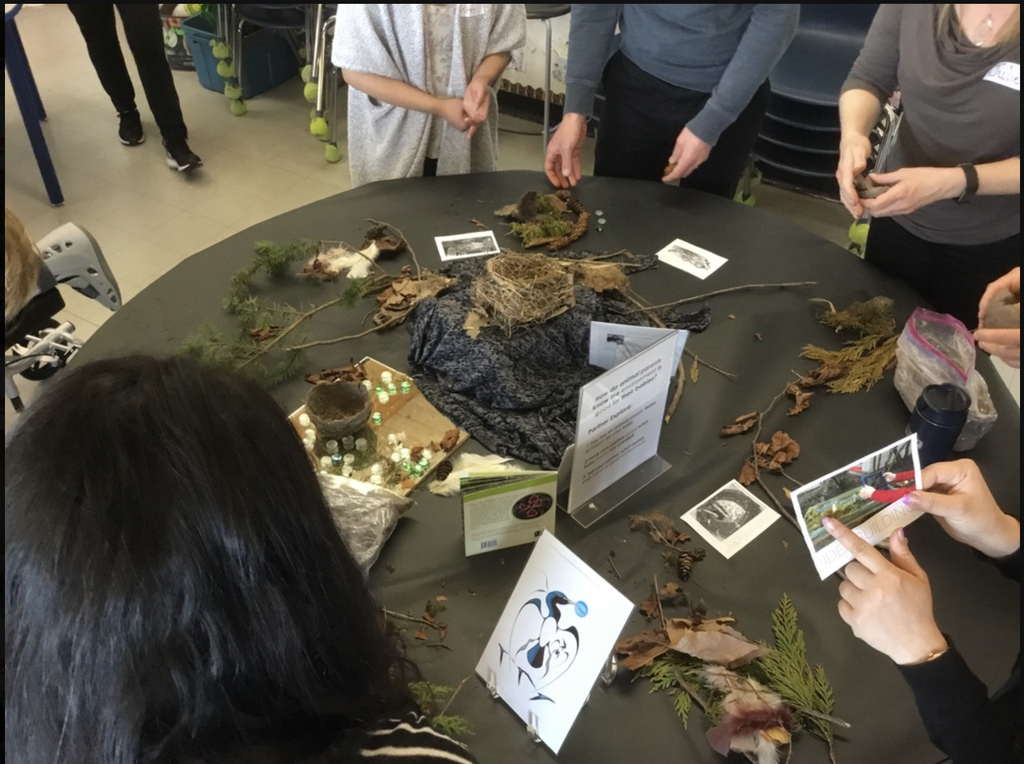
Research on stress contagion helped me put language to something I was already witnessing: the emotional experiences of teachers and students are entangled. The conditions surrounding teachers don’t simply stay with teachers; they can become part of the conditions in which children learn. My doctoral inquiry grew from that tension. After years of asking what might help children inquire, create, and flourish, I found myself turning toward the adults doing so much of the cultivating: What conditions might help teachers flourish, too? (Paterson, 2025).
Questioning the conditions that make flourishing possible brought me back around tables with teachers—making, wondering, talking, and thinking with humble materials—but with my attention widening. My teacher co-inquirers cared enormously about children and about doing beautiful, ambitious work. They were also carrying a great deal of concern.
Falkenberg’s writing on well-being and well-becoming helped me think about flourishing as both how we are living now and how our lives are continually unfolding through the ways we learn, relate, participate, and become (Falkenberg, 2024). Ettinger’s concept of carriance brought caring and carrying into the same frame, helping me think about what it means to carry—and to experience ourselves as carried—through our encounters with others (Ettinger, 2015; Kaiser & Thiele, 2018). Together, these concepts underpinned a persisting question: What conditions carry teachers into flourishing?
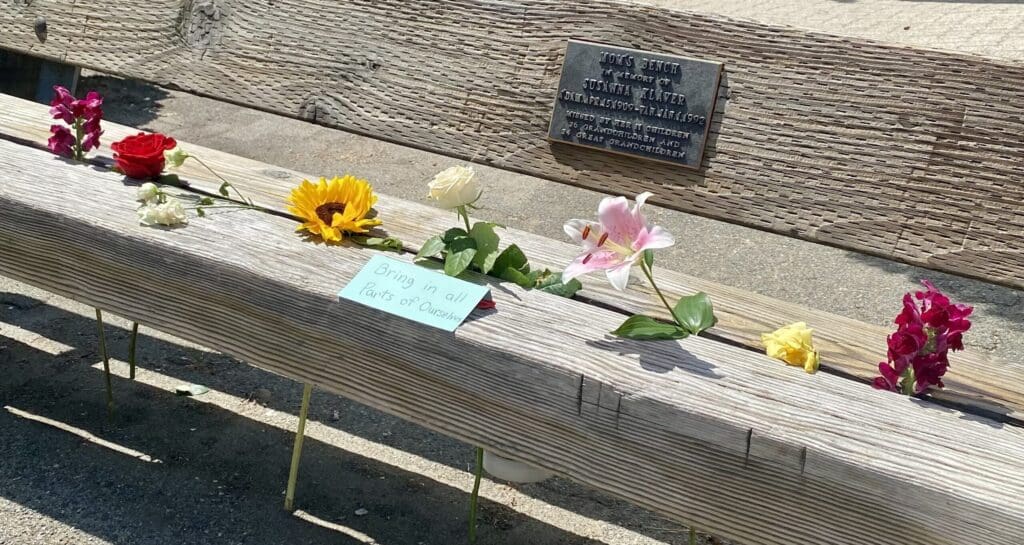
Twenty years after those first Living Inquiry tables, I’m beginning to wonder whether I’ve been asking variations of the same question all along: What are we cultivating, and what conditions allow it to flourish? I care deeply about wellbeing, but I don’t want flourishing to mean asking less of ourselves, our children, or our schools. I love ambitious learning. I love the pleasure of wrestling with something difficult and the satisfaction of bringing something worthwhile into being. I care about accomplishment. And inquiry has been at the heart of my work from the beginning.
From Research Lab to Your Table:
Lately, I’ve been imagining accomplishment, wellbeing, and inquiry a little like the offerings on a beautiful charcuterie board. Each can be delicious on its own. But intentionally arranged in relationship—the sharp beside the sweet, something creamy with something crisp—the flavours begin to enliven one another. The experience becomes richer, more harmonious, more fulsome because of what each brings to the others. What might become possible if we approached accomplishment, wellbeing, and inquiry in much the same way—not as competing priorities, but as distinct dimensions of education that can deepen and enliven one another?
Biesta’s writing on educational purpose reminds us that what matters in education cannot be reduced to what is easiest to measure; education is also concerned with how we live together and who we are becoming in the world (Biesta, 2020). My middle-schoolers were telling me something about this twenty years ago when they called their learning “beyond marks.” Perhaps the question isn’t whether accomplishment matters, but what we are willing to count as an accomplishment?
These days, I think a lot about how we set the table—not only what we place upon it, but the conditions we create around it: time, trust, beauty, challenge, companionship, ideas, materials, possibility, care. We cannot decide in advance what another person will think, make, notice, or become. Perhaps that’s part of the beauty of it. We can prepare the conditions without prescribing what happens next.
So now I’m wondering about your table. What are you putting on it? How might those things enliven one another? And who would you like to invite to pull up a chair? Perhaps there’s a colleague whose thinking always sends yours somewhere new, or a few people wrestling with a question you’ve been carrying too. What might you put in the middle—a reading, an object, a question, something to make? You don’t need to know where the conversation will lead. Maybe that’s the point. Set the table. Invite good company. Put something interesting in the middle. Then enJOY what becomes possible, together.
References + Further Reading
Biesta, G. J. J. (2020). Risking ourselves in education: Qualification, socialisation, and subjectification revisited. Educational Theory, 70(1), 89–104.
Ettinger, B. L. (2015). And my heart, wound-space. Wild Pansy Press.
Falkenberg, T. (Ed.). (2024). Well-being and well-becoming in schools. University of Toronto Press.
Gibson, J. J. (1977). The theory of affordances. In R. Shaw & J. Bransford (Eds.), Perceiving, acting, and knowing: Toward an ecological psychology (pp. 67–82). Lawrence Erlbaum Associates.
Kaiser, B. M., & Thiele, K. (2018). If you do well, carry! The difference of the humane: An interview with Bracha L. Ettinger. philoSOPHIA, 8(1), 101–125.
Paterson, M. A. (2010). Living inquiry as pedagogy [Master’s thesis, University of British Columbia]. UBC Open Collections
Paterson, M. (2015a). Transformations, interpretations, and inspirations. Natural Pod. Natural Pod
Paterson, M. (2015b). Better learning with flexible classrooms. Natural Pod. Natural Pod
Paterson, M. A. (2025). Making care matter through co-inquiry: The HeART of well-becoming [Doctoral dissertation, Simon Fraser University]. SFU Summit
Weisberg, D. S., Hirsh-Pasek, K., Golinkoff, R. M., & McCandliss, B. D. (2014). Mise en place: Setting the stage for thought and action. Trends in Cognitive Sciences, 18(6), 276–278. PubMed
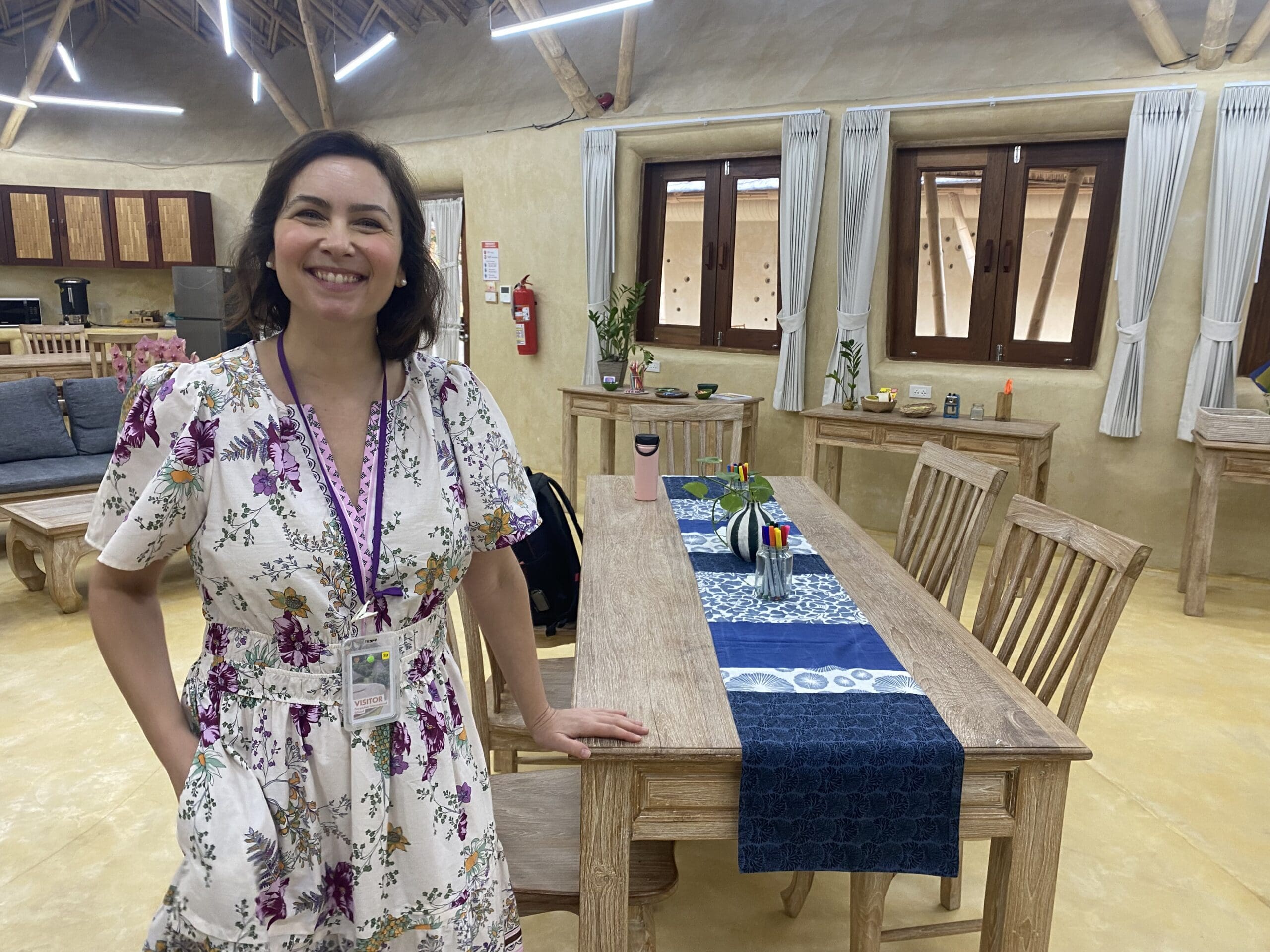

Bring creativity, connection, and joy to the books you read together. My free Hosting Kit turns professional reading into a fun, participatory experience—inviting colleagues to play with ideas, make meaningful connections, and put new thinking into practice.
