What Concepts Live Here?
Concepts help us organize and interpret the world. But what if the categories through which we make meaning are more fluid, contextual, and consequential than they first appear?
When I introduce concept-based curriculum and instruction to educators, I often begin with my simplest definition: Concepts are (made up) ideas.
The parentheses matter.
Dr. H. Lynn Erickson and Dr. Lois Lanning have profoundly shaped how I understand and teach for conceptual understanding. I had the privilege of apprenticing with both scholars, and I continue to teach their work with deep respect. Lynn later wrote the foreword to my book, Pop-Up Studio, where I bring conceptual learning into relationship with materials and lived experiences.
One definition continues to guide my thinking: a concept is a mental construct that frames a set of examples sharing common attributes (Erickson, 2002).
In my earlier writing, I compared concepts to file folders that help us gather and organize related particulars. I also imagined them as Russian nesting dolls, with concepts fitting inside one another and their relationships growing more sophisticated as we deepen our understanding.
I still find these metaphors enormously useful. Concepts allow us to move beyond disconnected facts and skills to recognize patterns, make relationships, organize knowledge, and transfer understanding into new contexts. Erickson’s work helped me understand the relationships among facts, topics, concepts, and generalizations, while Lanning’s scholarship helped me see how skills, strategies, and processes participate in conceptual thinking within process-based disciplines. These distinctions have shaped how I plan, teach, and work alongside other educators.
Lately, however, I have found myself returning to those parentheses in my simplest definition.
If concepts are (made up) ideas, what does the made up part mean? Not that concepts are imaginary or arbitrary, but that they are constructed. We use them to gather particulars, recognize patterns, make distinctions, and organize experience. And because concepts are constructed, the act of categorization matters. Which attributes become significant? Which examples come most readily to mind? How does context change the way a concept behaves? What might a category make easier for us to see—and what might it make more difficult?
Yes, categories help us think but categorization is never innocent.
Human beings categorize as a way of freeing working memory. Categories help us manage the tremendous complexity of the world by allowing us to recognize patterns across difference. We encounter many kinds of chairs, for instance, yet recognize something chair-like about them. We encounter countless instances of change without requiring each one to look alike before recognizing a relationship among them. Without categories, every person, object, event, and experience would have to be encountered as wholly new.
Yet research into categorization complicates the idea that categories operate as tidy mental containers whose members all belong because they possess the same defining attributes.
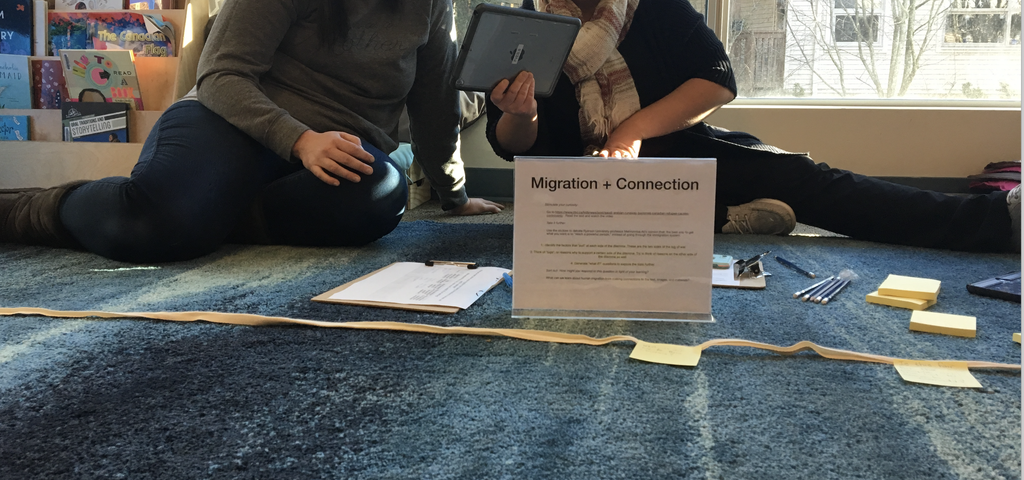
in the Fraser Valley, B.C.
Eleanor Rosch’s influential work on categorization showed that members of a category are not necessarily psychologically equivalent. Some examples function as more typical—or more readily recognizable—representatives of a category than others. A robin and an ostrich are both birds, for example, but they do not necessarily occupy equivalent positions in our mental organization of bird. Living on the west coast of Canada, when I think of a bird, a seagull comes to mind. Rosch’s prototype research challenged classical accounts of categorization and helped establish that categories can possess internal structure, with some members perceived as better examples than others (Rosch, 1978).
That finding makes a seemingly simple exercise rather interesting. Let’s test it out now:
Picture a bird.
Notice what appeared.
Now picture a scientist. A family. A leader. A successful student.
The point is not to catch ourselves harbouring an unacceptable thought or to determine whether the image that appeared was right or wrong. I am more interested in what becomes available for us to notice about our own thinking. If some examples come to mind more readily than others, how did they get there? What experiences, images, stories, relationships, institutions, and cultural representations have participated in shaping what feels typical to us?
The social implications come alive when we imagine how our conceptualizations of bird to scientist, family, leader, or successful student shape our daily choices and actions. Categories do not simply organize objects. They participate in how we interpret and respond to people, behaviours, relationships, possibilities, and ourselves. The very categories that make the world more intelligible can also influence what we expect to encounter within it.
This is where my little phrase concepts are (made up) ideas begins to feel newly provocative.
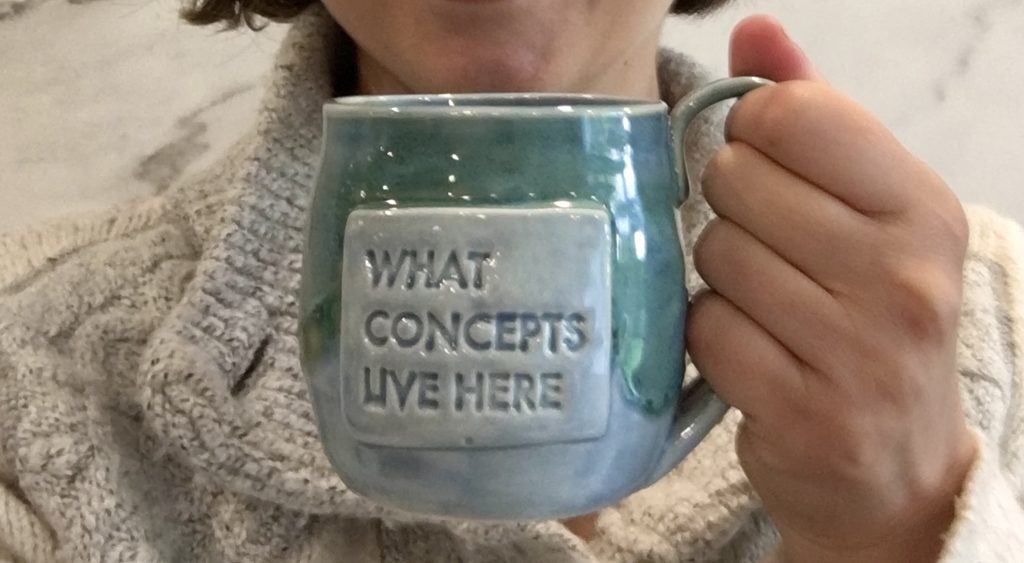
When categorization enters the classroom
These questions are not only theoretical for me. I am exploring them right now with educators at Grace Episcopal Day School, one of my partner schools, through our ongoing Concept Essentials series.
We began, as I often do, by exploring how categorization helps us make meaning. We sort, group, distinguish, and name so that we can recognize relationships and build increasingly sophisticated understandings. But as our work together developed, another question surfaced: Where do the categories and associations available to us come from?
The origins of our conceptualizations became particularly important as we considered cultural representation. The people, characters, images, stories, and examples learners repeatedly encounter participate in shaping what comes to feel typical within a category. If our encounters with leader, family, hero, beauty, scientist, or success are narrow, the conceptual associations we form may become narrow too. Categorization is doing important cognitive work—but it is also happening within culture.
Rather than treating that tension as something to resolve, we are using it as a place for inquiry. How can we help learners form categories while also helping them notice, question, and revise them? How might another example complicate what seemed obvious? What happens when an encounter doesn’t fit neatly within the category we have already constructed?
In one of our conversations, we began playing with the relationship between EVIL and CHARACTER. Categorizing a fictional character as evil can organize information quickly. Certain actions become evidence. Expectations form. Particular interpretations of motives become more illuminated. But what happens when we place COMPASSION or MISUNDERSTANDING alongside that relationship? What might PERSPECTIVE, BELONGING, or POWER make newly visible?
We don’t need to decide that evil was the wrong interpretation or replace it with a more comfortable one. Instead, another concept can give us reason to return to the evidence. Which details become newly significant? What becomes harder to explain? Does the original category still hold? Does it become more complicated? Can apparently contradictory concepts coexist? What might one conceptual lens have brought into the foreground while another remained difficult to see?
For me, this is where concept-based inquiry and anti-bias practice become deeply connected. The aim is not to stop categorizing—we couldn’t make meaning without doing so—but to become increasingly conscious of the categories through which we make meaning, and increasingly willing to complicate them.
Concepts are not isolated ideas. Concepts are ecological.
These conversations at Grace have made my encounter with the work of Liane Gabora, Eleanor Rosch, and Diederik Aerts feel especially timely. In Toward an Ecological Theory of Concepts, they argue that theories of concepts have struggled to account for the fluid, creative, and context-sensitive ways human beings actually use them. Rather than treating concepts primarily as identifiers for categories, they propose an ecological account in which concepts participate in generating meaning through relationships among mind, world, and context (Gabora et al., 2008).
This is not an argument that categories are useless. Quite the opposite. It asks us to consider whether categorization tells the whole story of what a concept does.
Gabora et. al’s argue that a concept is not simply a stable container waiting to be filled with the correct examples. Context can influence which properties become salient and how a concept is understood. Concepts interact with other concepts, and those relationships can generate possibilities that are difficult to explain if we imagine each concept as a fixed, isolated structure (Gabora et al., 2008).
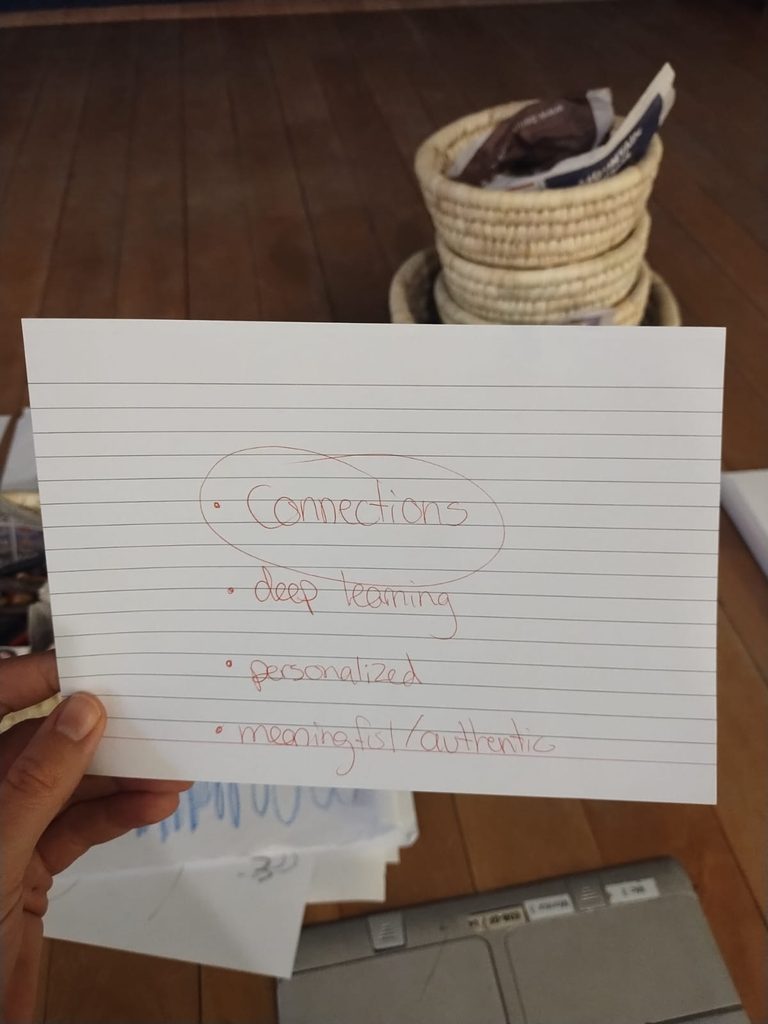
I find the idea of flexible concepts particularly interesting because it picks up an ecological thread that has already appeared elsewhere in my thinking. In What Can a Material Make Possible?, I drew on James J. Gibson’s (1977) theory of affordances to consider how possibilities for action emerge in relationship among a living being and their environment. A chair might afford sitting, climbing, reaching, blocking, or building depending upon who encounters it, what they are trying to do, and the circumstances in which the encounter occurs.
I love thinking about concepts in a similar way because it helps me design creative experiences that support plural realities through divergent thinking.
Let’s muse on this mindbender:
Perhaps meaning is not located entirely inside a concept any more than possibility is located entirely inside an object. What becomes available to think may shift as a concept enters into relationship with other concepts, experiences, people, and contexts.
As I apply my learning to my own Concept–Material–Experience framework, I’m renewed curiosity. My Pop-Up Studio approach deliberately places these three dimensions in relationship. A concept changes what we notice in an experience. An experience can complicate what we understand about a concept. A material can make a conceptual relationship perceptible that words alone had not. Perhaps my impulse to hold concepts, materials, and experiences together has always been, at least in part, an ecological one.
What concepts live here?
For years, I have invited educators and learners to play a simple game I call What Concepts Live Here? The premise is that concepts are everywhere if we learn to notice them. We can look at a curriculum outcome, a picture book, a mathematical pattern, a scientific phenomenon, an artwork, an ordinary object, or something happening in our lives and ask: What larger ideas might live here? Trying on different disciplinary lenses changes what becomes available to notice; a mathematician, scientist, artist, historian, or writer may perceive quite different conceptual possibilities within the same encounter.
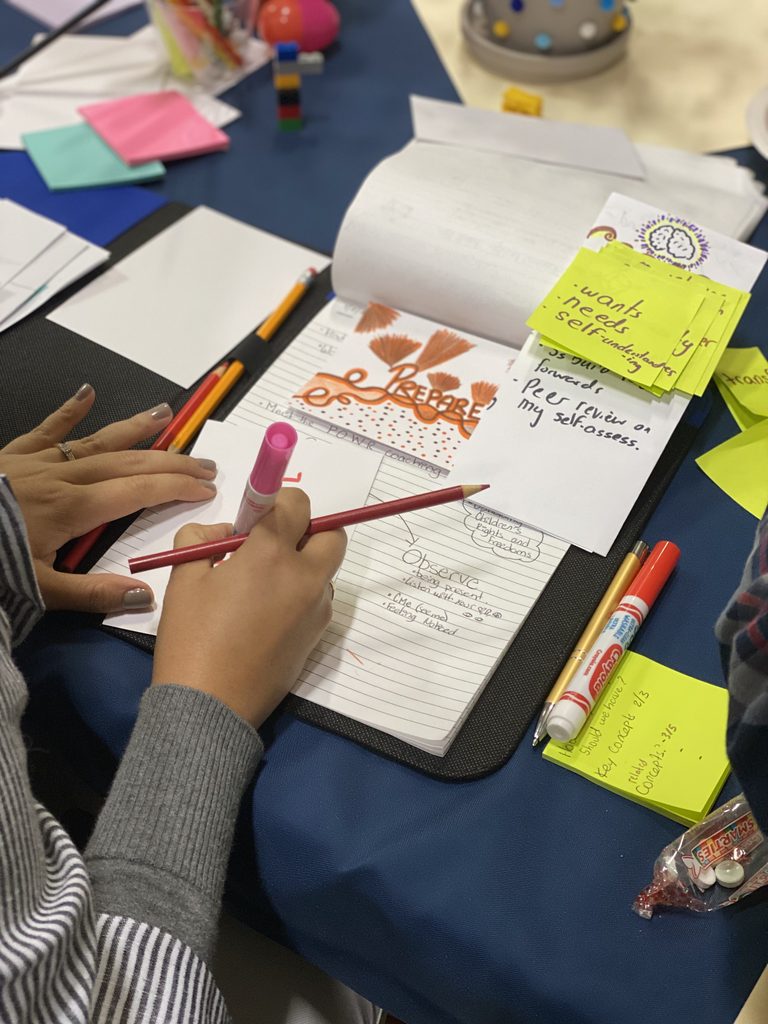
I have traditionally used this practice to help educators look beneath the curriculum they already need to teach and uncover concepts, relationships, and possibilities for inquiry. But the research on categorization, alongside our inquiry at Grace, is helping me see another possibility inside the question.
What if we don’t stop once we have identified the concepts?
We can begin by asking learners what concepts they perceive within a text, image, phenomenon, historical event, mathematical relationship, problem, object, or lived situation. Rather than treating the exercise as a guessing game in which the teacher already knows the “right” concept, we can ask learners to make their reasoning visible: What makes you see belonging here? Where do you notice power? What makes this an example of change?
Then we can change the conceptual field.
Introduce a concept that has not yet appeared, or invite learners to exchange concepts with another group and return to exactly the same material. Ask what becomes noticeable now that wasn’t as noticeable before. What evidence takes on new significance? What becomes less certain? Where does the new concept strengthen, trouble, or transform an earlier interpretation?
We might also become curious about the concepts that do not appear. Which concept seemed most obvious, and why? Which examples have come to represent the category for us? Whose experience or perspective might make another concept available? What happens when someone organizes the same particulars differently?
This is where conceptual learning becomes especially interesting to me. A conceptual lens doesn’t simply help us see. It also participates in determining what comes into view.
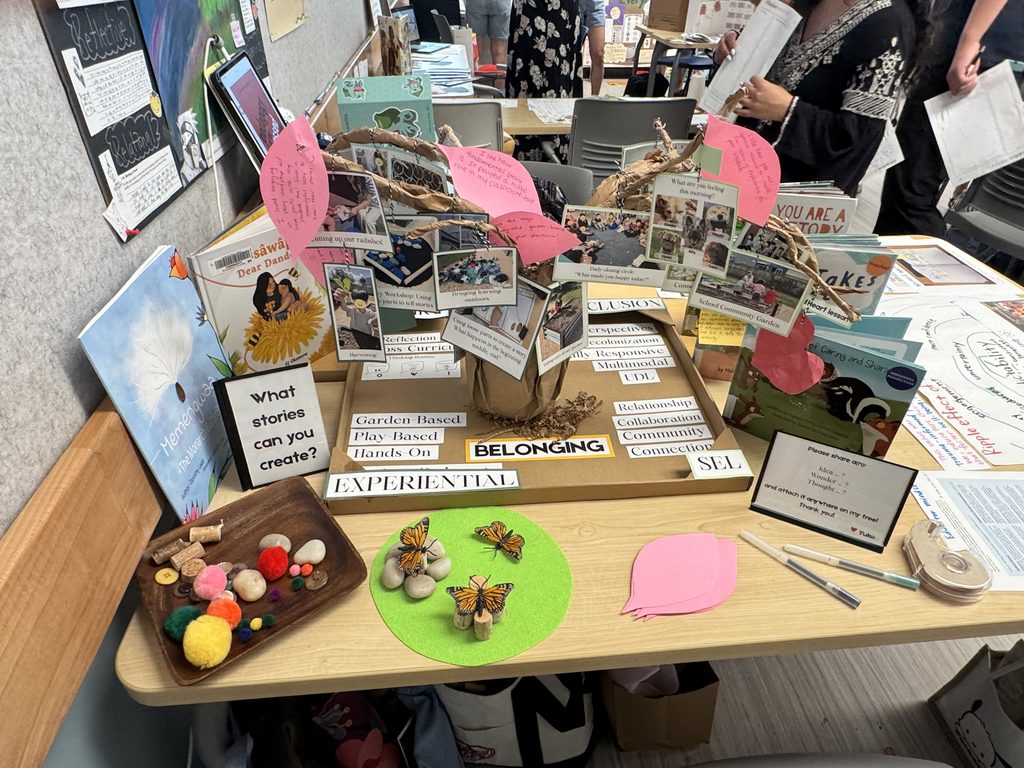
This is not an argument against categorization. Categories are indispensable to thinking. Nor does acknowledging that concepts are constructed mean that every category is arbitrary or every interpretation equally well supported. Evidence matters. Disciplinary knowledge matters. Distinctions matter.
Rather, categorization itself can become an object of inquiry.
I still teach concepts with deep respect for the scholarship that taught me to recognize their extraordinary educational power. Concepts help learners organize knowledge, make connections, build increasingly sophisticated relationships among ideas, and carry understanding into unfamiliar situations. What this research—and my ongoing work with educators—is adding for me is another dimension: conceptual sophistication can also involve becoming more conscious and flexible about the categories through which we make meaning, recognizing what they foreground, noticing what they obscure, and remaining willing to reorganize our thinking when another concept, context, or perspective makes something newly visible.
So I return to the question I have asked educators and learners for years:
What concepts live here?
Only now, I place another question beside it:
How are the concepts I bring shaping what I am able to see?
Want to continue this inquiry with me?
The relationship among concepts, materials, and experiences sits at the heart of my Pop-Up Studio approach. It also informs my Finding the Big Ideas, What Concepts Live Here?, Creating to Think, and Thinking Through Analogy workshops, where educators explore how conceptual lenses can uncover deeper possibilities within curriculum and help learners develop, challenge, and represent increasingly sophisticated ideas. If these questions connect with work happening in your learning community, I’d love to continue the inquiry with you and your team.
References
Erickson, H. L. (2002). Concept-based curriculum and instruction: Teaching beyond the facts. Corwin Press.
Gabora, L., Rosch, E., & Aerts, D. (2008). Toward an ecological theory of concepts. Ecological Psychology, 20(1), 84–116.
Gibson, J. J. (1977). The theory of affordances. In R. Shaw & J. Bransford (Eds.), Perceiving, acting, and knowing: Toward an ecological psychology (pp. 67–82). Lawrence Erlbaum Associates.
Rosch, E. (1978). Principles of categorization. In E. Rosch & B. B. Lloyd (Eds.), Cognition and categorization (pp. 27–48). Lawrence Erlbaum Associates.
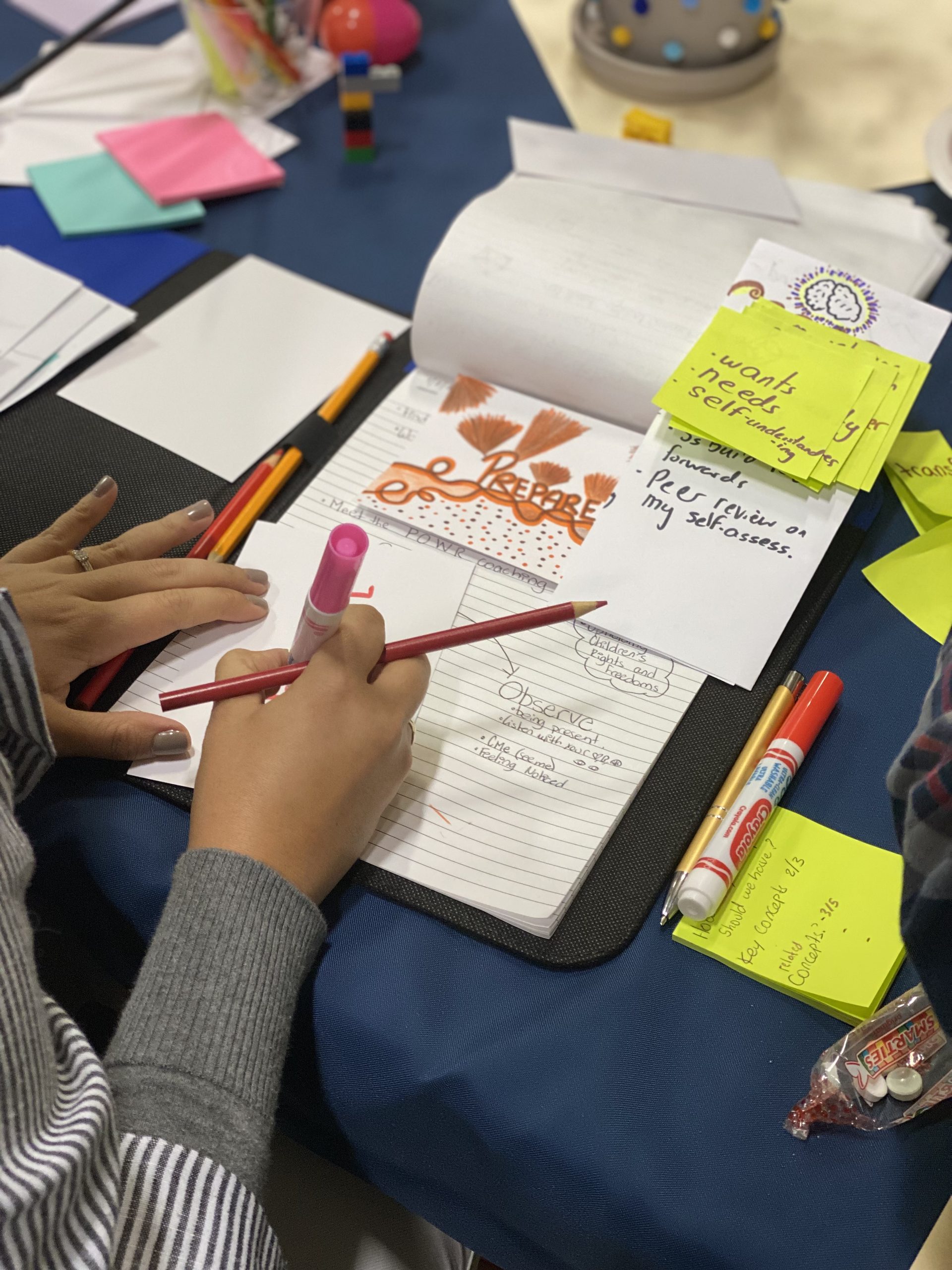

Bring creativity, connection, and joy to the books you read together. My free Hosting Kit turns professional reading into a fun, participatory experience—inviting colleagues to play with ideas, make meaningful connections, and put new thinking into practice.
